
May averages
- Average high
- 71.7°F
- Average low
- 43.4°F
- Snow
- 1.4 in
- Precipitation
- 2.29 in
Monthly averages: NOAA U.S. Climate Normals 1991-2020, Denver-Stapleton station. Averages, not forecasts.
- The average date of Denver’s last spring freeze is May 5, according to the National Weather Service.
- Denver Water’s summer watering rules run May 1 to October 1; lawn watering is not allowed between 10 a.m. and 6 p.m.
- Rocky Mountain National Park’s timed entry reservations for late May and June are released on May 1 at 8 a.m. on Recreation.gov.
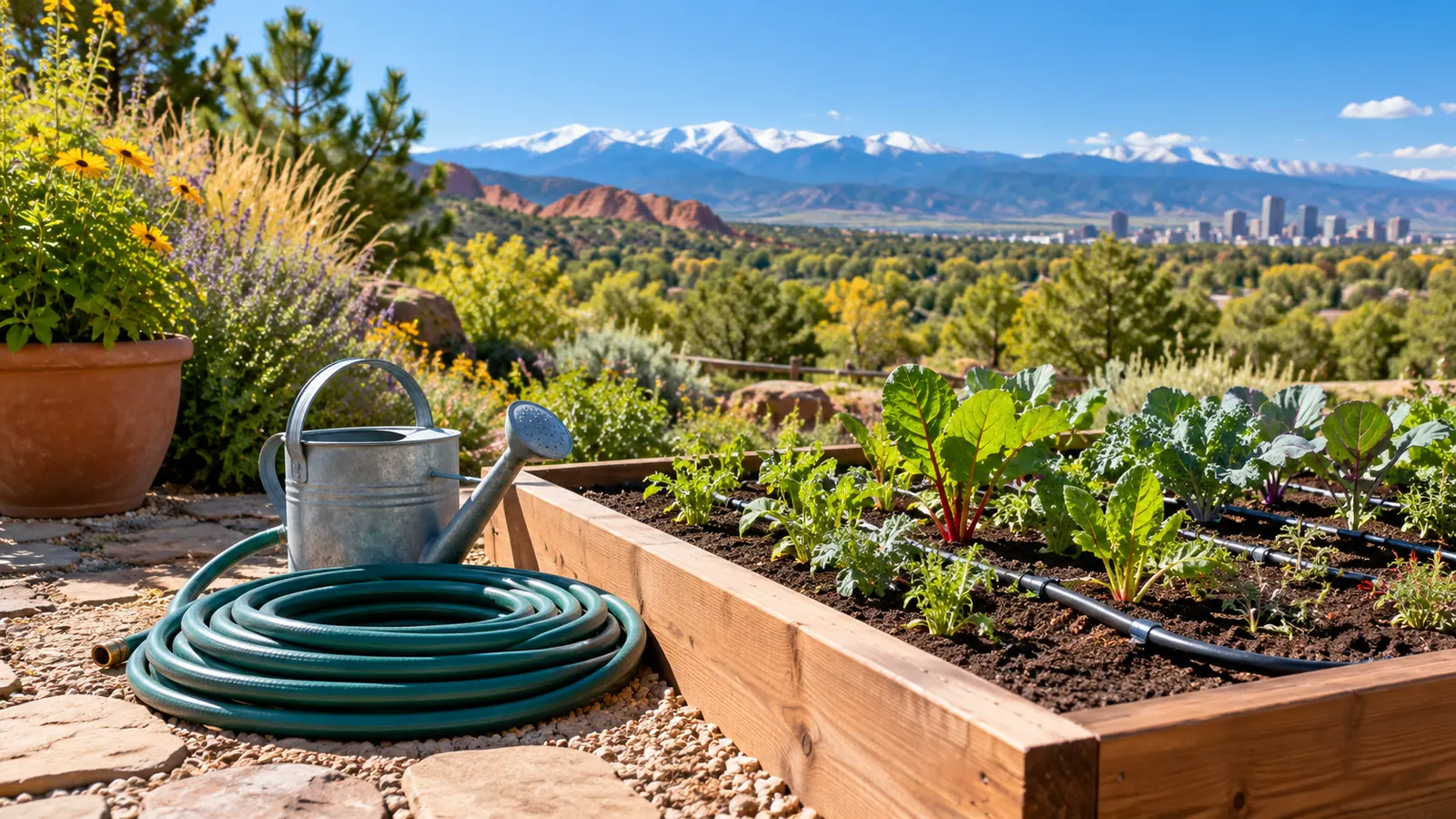
May is the month Denver turns fully green. Lawns fill in, trees leaf out and the city’s gardens finally get planted. It is also when summer rules and routines start: watering restrictions, mountain reservations and the first hot days. Here is a checklist for your first Denver May.
The weather
| Measure | May normal |
|---|---|
| Average high | about 72°F |
| Average low | about 43°F |
| Precipitation | about 2.29 inches, the wettest month |
| Snowfall | about 1.4 inches |
| Nights at or below freezing | about 2 |
May is Denver’s wettest month on average in the federal climate normals. Much of that rain falls in afternoon showers and thunderstorms. Snow is rare but not unheard of. The National Weather Service recorded the last snowfall of the 2025-26 season on May 6, 2026, and the city has seen measurable snow as late as June 2.
Planting after the last frost
The Weather Service gives May 5 as the average date of the last spring freeze in Denver. The latest last freeze on record came on June 8, 2007. Most gardeners plant warm-season vegetables and flowers after mid-May, keeping a cover handy for cold nights.
Watering rules start May 1
Denver Water’s summer watering rules, in place since 2005, run every year from May 1 to October 1. The core rules:
- No lawn watering between 10 a.m. and 6 p.m.
- Do not let water pool in gutters, streets or alleys, or spray onto concrete and asphalt.
- Repair leaking sprinkler systems within 10 days.
- Do not irrigate while it is raining or during high winds.
- Use a hose nozzle with a shut-off valve when washing a car.
Drought years
In 2026, with record-low snowpack, Denver Water declared a Stage 1 drought on March 25. It asked for a 20 percent cut in water use, limited outdoor watering to two days a week on assigned days and added temporary drought charges for outdoor use starting with May. New lawns and plants could get a temporary watering establishment permit: up to three weeks for new bluegrass seed, sod, trees or plants and up to eight weeks for native grass seed. Check the utility’s website each spring to see what applies.
The drought rules applied to big users too: Denver Water said public parks and other large irrigators had to reduce use by 20 percent, though their schedules may differ from residents’. To report water waste in a Denver park, the utility says to call 3-1-1.
Tip: Denver Water notes that longer grass uses water more efficiently. Keep cool-season grasses like Kentucky bluegrass at 2.5 to 3.5 inches, and try the cycle-and-soak method so water sinks in instead of running off.
Booking Rocky Mountain National Park
Rocky Mountain National Park uses a timed entry system in summer. For 2026, the park required reservations from May 22 to October 12 to enter between 9 a.m. and 2 p.m. A separate Timed Entry plus Bear Lake Road reservation is needed for the busy Bear Lake corridor from 5 a.m. to 6 p.m., through October 18.
| Reservations released at 8 a.m. on Recreation.gov | For dates |
|---|---|
| May 1 | May 22 to June 30 |
| June 1 | July 1 to 31, plus any June dates left |
| July 1 | August 1 to 31, plus any July dates left |
More reservations are released at 7 p.m. the night before each date. A reservation costs a $2 processing fee, and you still need an entrance pass. If you skip the reservation, you can enter before 9 a.m. or after 2 p.m. One reservation covers one vehicle for a day.
Afternoon storms and lightning
May’s rain often arrives as afternoon thunderstorms. The National Weather Service notes that lightning strikes the United States about 25 million times a year and kills about 20 people a year, and that while most lightning occurs in summer, people can be struck at any time of year. When thunder rumbles on a hike, a bike ride or a ballfield, head inside or to a hard-topped vehicle. On mountain hikes, start early so you are heading down before storms build.
Wildlife babies
The park says elk calves are born from late May into June and weigh about 30 pounds. Mothers are extremely protective, so keep your distance. The park’s rule of thumb: if you can still see the animal past your outstretched thumb, you are too close.
Other May tasks
- Service the air conditioner or evaporative cooler before the first hot week.
- Sign up for ozone pollution forecasts, which the state starts sending on May 31.
- Clean gutters before the summer thunderstorm season.
- Plan weekends at state parks; the Keep Colorado Wild Pass covers entry with your vehicle registration.
Next
June brings the first real heat and the start of the outdoor concert season. See Denver in June: Long Days, First Heat and Red Rocks Season.