
March averages
- Average high
- 56.4°F
- Average low
- 27.1°F
- Snow
- 8.8 in
- Precipitation
- 1.12 in
Monthly averages: NOAA U.S. Climate Normals 1991-2020, Denver-Stapleton station. Averages, not forecasts.
- March is Denver’s snowiest month on average, with about 8.8 inches, according to federal climate normals.
- On March 18, 2003, Denver recorded 22.9 inches of snow in one day, and on March 14, 2021, 19.9 inches, the National Weather Service says.
- Colorado annual fishing licenses run from March 1 through March 31 of the following year, 13 months.
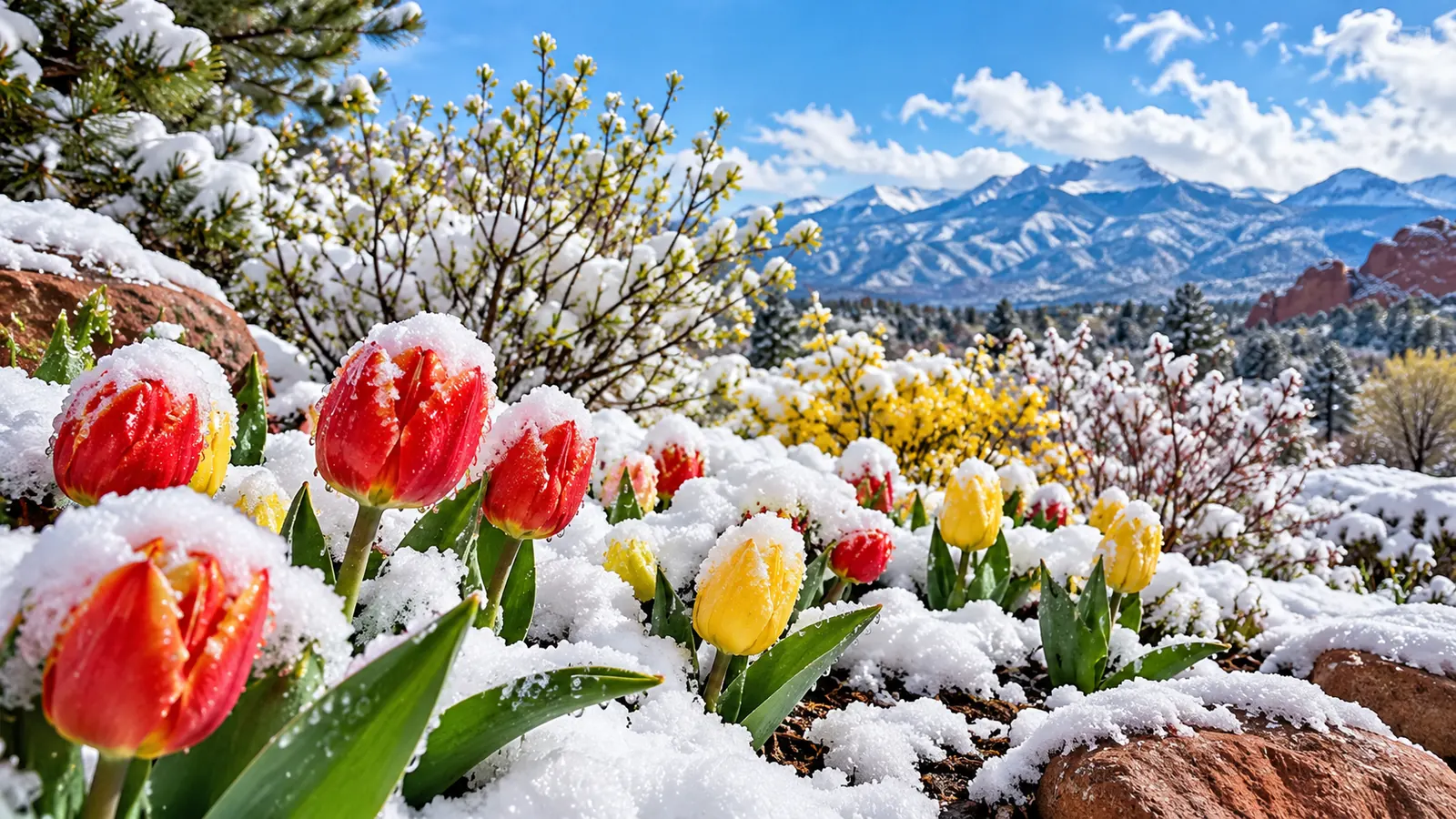
Many newcomers are surprised to learn that March, not January, is Denver’s snowiest month. It is also the month of the first warm days, crocuses and patio lunches. Both are true, sometimes in the same week. Understanding spring storms will save you a lot of frustration.
March at a glance
| Measure | March normal |
|---|---|
| Average high | about 56°F |
| Average low | about 27°F |
| Nights at or below freezing | about 22 |
| Snowfall | about 8.8 inches, the most of any month |
| Precipitation | about 1.12 inches |
Compare the precipitation with January’s 0.46 inch. March storms carry much more water, because spring snow is heavier and wetter. That makes it hard to shovel and hard on trees, but valuable for the region’s water supply.
The big March storms
The National Weather Service’s list of Denver’s largest one-day snowfalls since 1882 includes several March storms:
- 22.9 inches on March 18, 2003
- 19.9 inches on March 14, 2021
- 18.0 inches on March 5, 1983
- 17.3 inches on March 21, 1944
March storms can also bring wind. The Weather Service’s list of Denver’s highest gusts includes 80 mph on March 13, 2019, during a blizzard. Those events can close roads, ground flights and knock out power.
How to prepare
- Keep the snow shovel handy even after a warm spell.
- Shake heavy snow gently off young trees and shrubs to keep branches from breaking.
- Have flashlights and a phone charger ready in case wet snow brings down power lines.
- If you fly, check your flight before leaving for the airport during a big storm.
Tip: Do not rush to plant tender vegetables or annual flowers in March. The average date of the last freeze in Denver is May 5, and the average last snowfall is April 28.
Why the wet snow matters
Spring storms help fill rivers and reservoirs. Denver Water declared a Stage 1 drought on March 25, 2026, citing record-low snowpack, and introduced mandatory watering limits for the summer. A wet March can make a real difference to the summer outlook, which is one reason long-time residents greet a spring blizzard with mixed feelings. Watering rules are covered in Denver in May: Last Frost, Watering Rules and Booking the Mountains.
Avalanches do not stop in spring
Heavy spring snow on top of an older snowpack can make mountain slopes unstable. The Colorado Avalanche Information Center produces the state’s avalanche forecasts and offers a free introduction called Avalanche Aware for anyone heading into snowy terrain. Check the forecast before any backcountry outing, even on a warm, sunny day after a storm.
Spring in Rocky Mountain National Park
March is still a quiet time in Rocky Mountain National Park. No timed entry reservation is needed, although an entrance pass is: $30 for a vehicle for one day or $70 for a park annual pass. Elk herds are often in the lower meadows. The park notes that bulls drop their antlers in winter and grow new ones in spring, sometimes up to an inch a day, covered in velvet. Stay at least 75 feet away.
Get the soil ready
March is a good month to prepare garden beds for later planting, on days when the ground is not frozen or soaked. Denver Water recommends tilling compost into areas you plan to plant, because amended soil helps new plants establish more successfully and hold water better. Doing it now means beds are ready when the frost risk ends in May.
March 1: fishing season paperwork
For anglers, March 1 is an important date. Colorado Parks and Wildlife says annual fishing licenses are valid from March 1 through March 31 of the following year, a 13-month window. Buying in early March gives you the full value. The state offers fishing on more than 6,000 miles of streams and more than 1,300 lakes and reservoirs, with over 35 species of fish. Licenses can be bought online, by phone or at retail locations.
Things to do in March
- Fish lower-elevation lakes and streams as ice comes off.
- Take a sunny-day hike in the foothills, but carry traction for icy trails after a storm.
- Watch for early spring birds in city parks and along creeks.
- Plan summer trips now: Rocky Mountain National Park’s timed entry reservations for late May and June open on May 1.
Driving
Winter driving rules still apply in March. Colorado’s traction law can be enforced on I-70 from Morrison to Dotsero through May 31, and spring storms can be among the worst of the year in the mountains. Check CDOT’s road information before heading west.
Next
April continues the tug-of-war between spring and winter. See Denver in April: Blossoms, Late Snow and Patience in the Garden for blossoms, late snow and how to plan the garden.