
April averages
- Average high
- 62.5°F
- Average low
- 33.7°F
- Snow
- 6.2 in
- Precipitation
- 1.67 in
Monthly averages: NOAA U.S. Climate Normals 1991-2020, Denver-Stapleton station. Averages, not forecasts.
- April averages about 6.2 inches of snow in Denver; the average date of the last measurable snowfall is April 28, according to the National Weather Service.
- The latest snowfall on record in Denver came on June 2, 1951.
- Denver Water’s summer watering rules begin May 1; the utility advises not to rush into irrigation season.
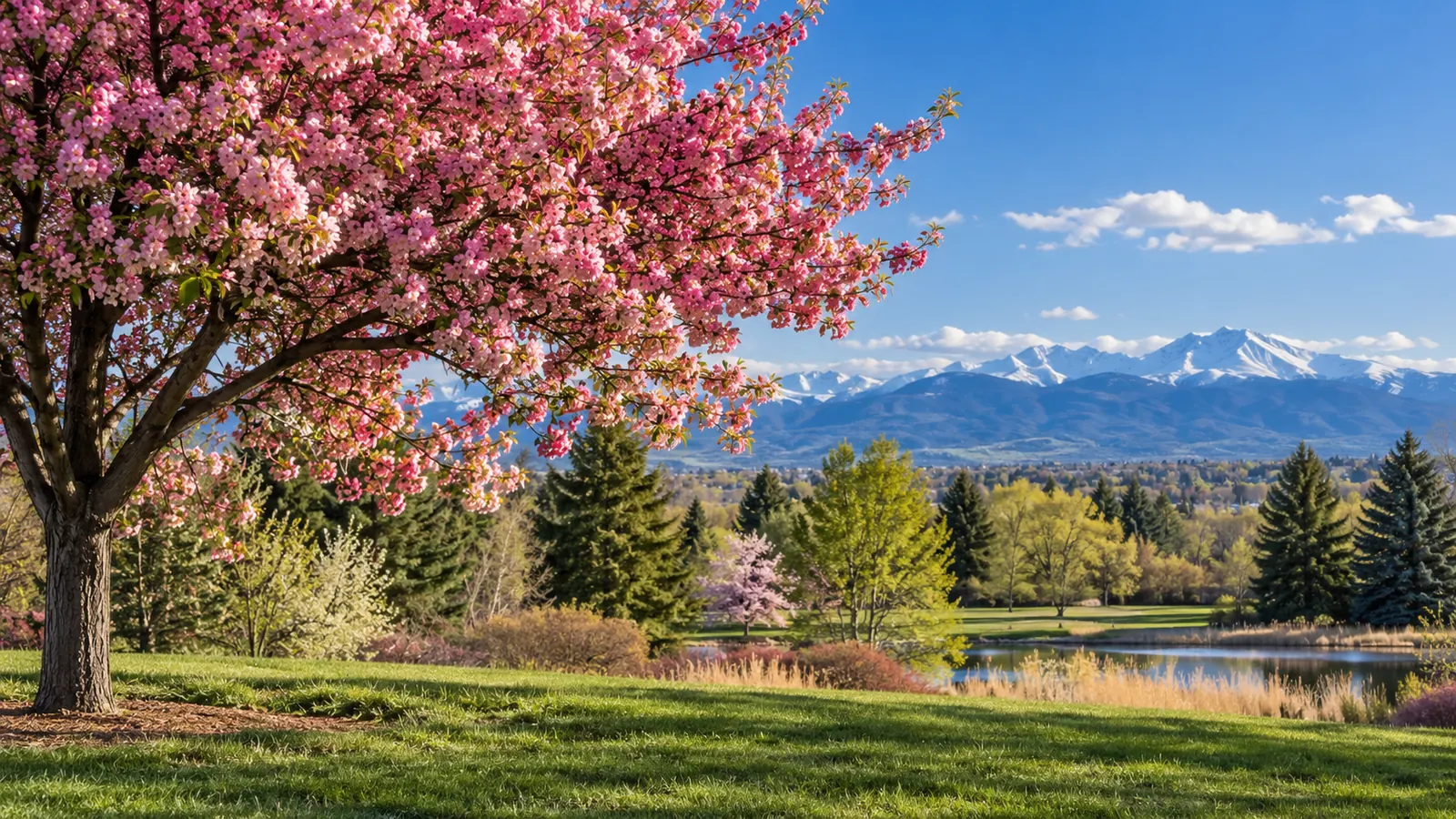
April in Denver is a month of contrasts. Crabapple and plum trees bloom, lawns green up and the first warm evenings arrive. Then a cold front comes through and covers it all with snow. Newcomers learn quickly not to put the snow shovel away too soon.
April’s numbers
| Measure | April normal |
|---|---|
| Average high | about 62.5°F |
| Average low | about 33.7°F |
| Nights at or below freezing | about 12 |
| Snowfall | about 6.2 inches |
| Precipitation | about 1.67 inches |
Those are averages from federal climate normals for 1991 to 2020. In practice, many April days are in the 60s or warmer, with snow coming in one or two storms that melt within a day or two.
When does snow stop?
The National Weather Service keeps detailed records for Denver. The average date of the last measurable snowfall is April 28, but late snow is common. In the ten years through 2026, the last snowfall of the season ranged from April 16, 2020, to May 21 in both 2019 and 2022. In 2026 it came on May 6.
The record is far later: 0.3 inch on June 2, 1951, and 5.6 inches on May 29, 1975. April has also produced one of the city’s largest single-day snowfalls: 23.0 inches on April 23, 1885, and 17.3 inches on April 2, 1957.
Patience in the garden
April’s warm days tempt new gardeners, but the frost risk is not over. The Weather Service puts the average date of Denver’s last spring freeze at May 5. Hardy plants such as spring bulbs and cool-season vegetables like peas can cope with cold nights, but tomatoes, peppers and summer annuals are best planted after that date.
- Keep frost cloth or old sheets ready to cover tender plants on cold nights.
- Do not prune spring-flowering shrubs until after they bloom.
- Watch the forecast before setting out seedlings from indoors.
Watering: hold off
Denver Water’s summer watering rules start May 1 and run to October 1. The utility reminds customers that it is still cool in May and that plants do not need much water in cooler months, so there is no need to rush into irrigation season. April is a good time to check sprinkler systems for leaks; the utility’s rules require leaking sprinkler systems to be repaired within 10 days.
In 2026, Denver Water declared a Stage 1 drought, asking customers for a 20 percent cut in use and limiting outdoor watering to two days a week on assigned days. Check the utility’s site in spring to see whether drought rules apply in your first summer.
Spring is also a good time to rethink the yard. Denver Water encourages what it calls a ColoradoScape: keeping the lawn you actually use and mixing in water-wise plants, native grasses and cooling trees that need little or no extra water once established. A smaller bluegrass area can make the summer watering rules much easier to live with.
Tip: Before you turn on the sprinklers for the first time, run each zone briefly and look for broken heads or water spraying onto sidewalks. Fix them now rather than in July.
Plan summer mountain trips now
If you want to see Rocky Mountain National Park in early summer, April is the time to plan. In 2026, timed entry reservations for May 22 through June 30 were released on May 1 at 8 a.m. on Recreation.gov, and the most popular dates went quickly. A reservation costs a $2 processing fee and lets one vehicle enter within a two-hour window; once inside, you can stay as long as you like. Without a reservation, you can still enter before 9 a.m. or after 2 p.m.
Rainy days: the library
April’s stormy days are a good time to explore the Denver Public Library. Its newcomer guide describes Plazas, open community spaces where immigrants practice English, prepare for citizenship, get computer help and meet people. Specialists help with community resources such as housing, food and medical care. The ideaLABs offer free makerspaces with equipment for video, music and textiles, and no card is needed to use them.
Spring outings
- Walk city parks when the flowering trees bloom.
- Fish lower lakes and rivers; a Colorado license bought on or after March 1 is good until the end of March next year.
- Hike lower foothills trails, which dry out sooner than mountain paths still under snow.
- Watch for wildlife: Rocky Mountain National Park notes that elk shed their winter coats each spring and that bulls begin regrowing antlers.
Looking ahead
May brings the last frost, the start of watering season and the opening of Rocky Mountain National Park’s summer reservation system. See Denver in May: Last Frost, Watering Rules and Booking the Mountains.