
June averages
- Average high
- 84.1°F
- Average low
- 52.9°F
- Snow
- none
- Precipitation
- 1.68 in
Monthly averages: NOAA U.S. Climate Normals 1991-2020, Denver-Stapleton station. Averages, not forecasts.
- June highs in Denver average about 84 degrees, with about 8 days at 90 or warmer, according to federal climate normals.
- Colorado’s health department issues daily ozone forecasts for the north Front Range from May 31 to August 31.
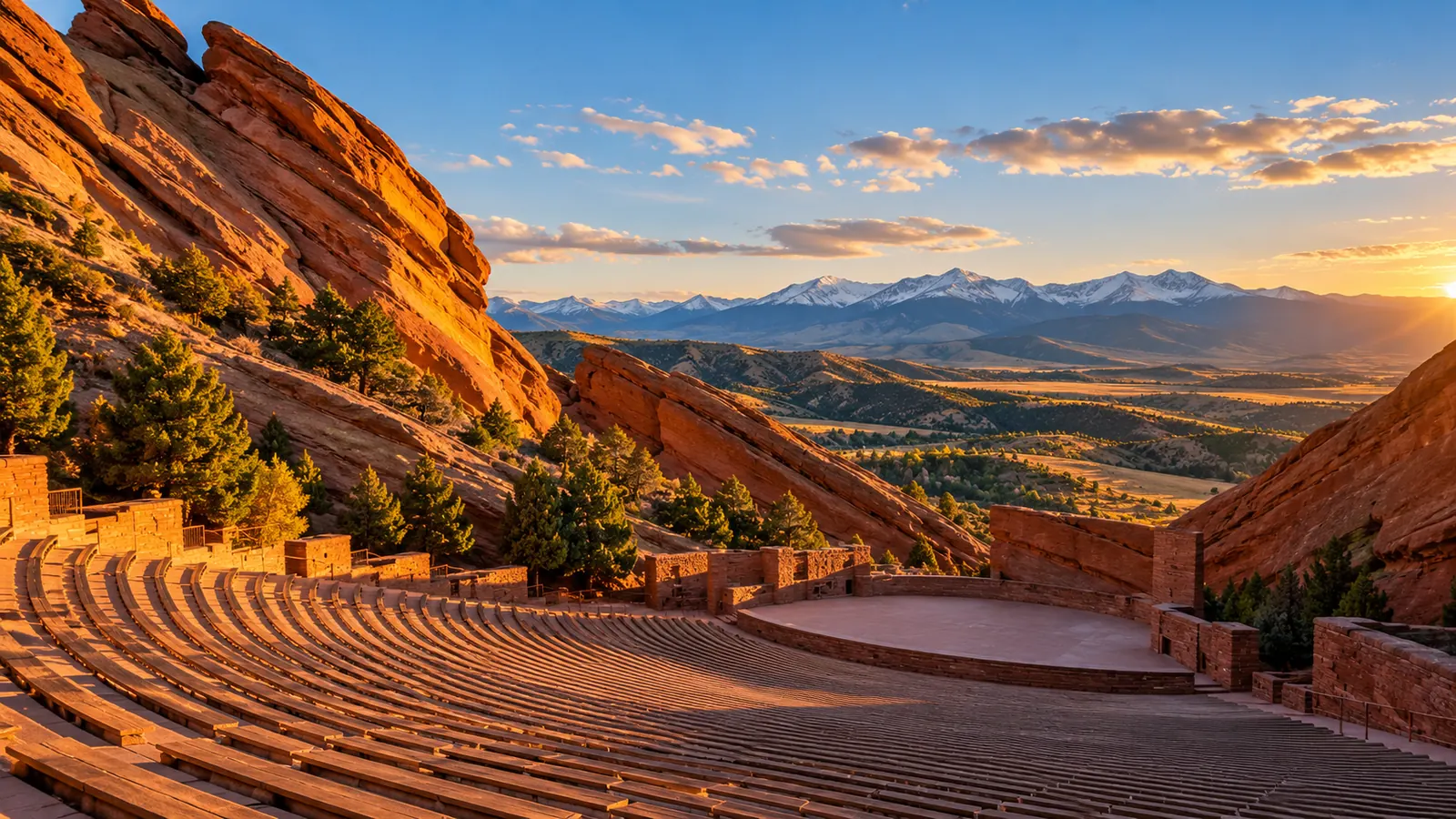
- Red Rocks Amphitheatre, owned and operated by the City and County of Denver, opened on June 15, 1941.
June is the month newcomers fall in love with Denver. The days are long, the mountains still carry snow on their peaks, and evenings cool off fast enough for a sweater on the patio. The first hot afternoons arrive too, along with a few new things to keep an eye on, from air quality to sunburn at altitude.
June weather
| Measure | June normal |
|---|---|
| Average high | about 84°F |
| Average low | about 53°F |
| Days at 90°F or warmer | about 8 |
| Precipitation | about 1.68 inches |
| Snowfall | none on average |
That 30-degree swing between afternoon and night is classic Denver: dry air warms fast in the sun and loses heat quickly after dark. In homes without central air, opening windows at night and closing them in the morning makes a real difference.
June can also bring violent weather. The National Weather Service’s list of Denver’s highest wind gusts is topped by 97 mph on June 18, 2013, when a tornado hit the airport weather station. Take severe thunderstorm and tornado warnings seriously.
Ozone season
Summer is when Colorado’s Front Range sees the most ground-level ozone, a lung irritant. The Colorado Department of Public Health and Environment explains that ozone forms when pollutants from vehicles, gas-powered equipment and industry react in heat and sunlight, and that wildfire smoke can add to it.
- The state’s air division sends daily ozone forecasts for the north Front Range from May 31 to August 31.
- When levels may exceed federal standards, the forecast is labeled an Ozone Action Day Alert.
- Anyone can subscribe to the daily emails, and forecasts are shared with the National Weather Service.
On alert days, the department suggests scheduling outdoor activity for mornings or late evenings, when ozone is usually lower, and choosing less strenuous activities, such as walking instead of running. It also notes that more alert days in recent years partly reflect a stricter federal standard, lowered from 75 to 70 parts per billion in 2015.
A Colorado twist: ozone from above
The health department also describes stratospheric intrusions, when ozone from high in the atmosphere is pulled down to the ground, usually in spring and early summer during and after cold fronts. Colorado may see them more than other states because of its high elevation and mountain terrain. The effects usually last a few hours, though levels can stay elevated for a few days, so an alert can come even on a cool, clear day.
Red Rocks
Red Rocks Amphitheatre, in the foothills west of the city, is owned and operated by the City and County of Denver. Its official site marks the 85th anniversary of its grand opening on June 15, 1941, and notes that the first concert on the site took place in 1906. The venue is LEED Gold certified, which its operators say makes it one of the oldest music venues in the country to earn that rating.
Concert tickets go on sale months ahead: shows for spring 2027 were announced in October 2026. The venue also hosts other programs, such as a fall fitness series on the amphitheater’s stairs. Bring water, sunscreen and patience on the drive.
Tip: At this altitude the sun is strong. Wear sunscreen and a hat for a long afternoon outdoors, and drink more water than you would at sea level.
Mountain days
By June, Rocky Mountain National Park’s timed entry system is in full swing. In 2026, reservations were needed from May 22 through October 12 to enter between 9 a.m. and 2 p.m., and the Bear Lake Road corridor required its own reservation from 5 a.m. to 6 p.m. July reservations were released on June 1 at 8 a.m. on Recreation.gov, with more each evening at 7 p.m. for the next day.
- Enter before 9 a.m. or after 2 p.m. if you do not have a reservation.
- Expect waits of 30 minutes or more at entrance stations on busy days.
- Watch for elk calves, born from late May into June; their mothers are very protective.
- Carry layers: high-country weather changes fast, and snow can linger on trails.
Yard and water
June is peak growing season for lawns, and Denver Water’s watering rules apply from May 1 to October 1: no lawn watering between 10 a.m. and 6 p.m. In drought years, such as 2026, watering is also limited to assigned days. Set sprinkler timers for early morning, when it is cool and calm.
June checklist
- Sign up for the state’s ozone forecast emails.
- Book July mountain trips as reservations open.
- Check window screens and fans for cool-night ventilation.
- Keep a refillable water bottle in the car.
July is the hottest month of the year and the peak of thunderstorm season; see Denver in July: Heat, Afternoon Storms and Staying Safe Outdoors.